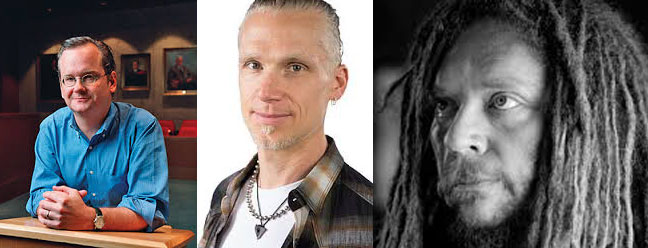
Thanks to Larry Lessig, Kurt Bollacker, and Jaron Lanier

In developing the Sleep and Dream Database (SDDb), a digital archive and search engine for dream research, I have been acutely aware that I possess no formal training in computer science or internet technology.  My doctoral degree is in religion and psychological studies, and I learned many things in the course of my graduate education, but nothing about how to conceive, build, or use a digital database.


Fortunately I’ve benefitted from the wisdom of three people—Larry Lessig, Kurt Bollacker, and Jaron Lanier—who have helped me understand how to translate my psychology of religion interest in dreams into the functional mechanics of a digital database.
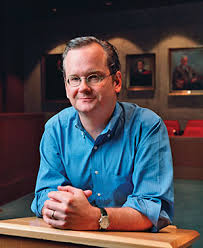
UnknownLarry Lessig was a first-year law school student with my soon-to-be wife at the University of Chicago, at the same time I was a doctoral student at the U. of Chicago Divinity School.  It was 1986 and 1987, and we spent a lot of time hanging out with Larry and a few other frighteningly smart, frighteningly conservative law students.  Once I asked Larry what he was doing for fun, and he said he was spending a lot of time in cyberspace.  I had recently read William Gibson’s 1984 novel Neuromancer, which popularized the term cyberspace, and excitedly I said to Larry, I’ve been reading Gibson’s work too, it’s so interesting how he envisions a disembodied reality of pure information flows…. Larry let me finish, then said he was spending time in actual cyberspace, exploring the earliest iterations of the world wide web.  While I was reading cool science fiction about cyberspace, Larry was really in cyberspace, figuring it out, studying its original development as it happened.

I look back on that conversation and think of it as planting a seed that’s coming to fruition now with the SDDb.  In 1999 Larry wrote a book called Code, and Other Laws of Cyberspace, and from that book I’ve learned the basic principle that everything we create in the digital world depends on the choices we make about how to structure information and its access.  It’s not just machines doing things on their own, it’s us making machines that do certain things and not others.  We can make good choices or bad choices about how we design those machines, freedom-affirming choices or freedom-limiting choices.

Thanks, Larry, for helping me understand that.
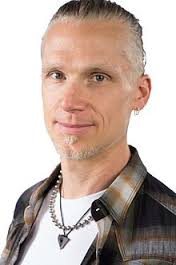
Unknown-1I met Kurt Bollacker through Dominic Luscinci, a statistician in San Francisco who had worked with Kurt on another database design project.  I really can’t believe my good fortune in having Kurt help me turn the SDDb from several pages of scribbled notes into a highly functional reality.  I’ve learned a little about his work as Digital Research Director of the Long Now Foundation, and it reassures me that I have found a person who has not only the technical skill to build the SDDb but also the philosophical vision to see where the digital future is leading us, and to design the database with that vision in mind.

One of the things I learned from Kurt early on was, “Data accumulate value over time.”  I’ve adopted that as a kind of mantra for the SDDb.  Data accumulate value over time.  Information that seems trivial or useless today can be a treasure to researchers in the future.  An awareness of that historical dynamic has a practical consequence for building databases: It means we should aim at a simple, flat, and state-free architecture that can exist independently of any specific type of software.  Because software systems come and go, the best way to create a database that will endure far into the future is to structure the information in a way that will make it easy to transfer from one type of software to another. That’s a key principle in the overall design of the SDDb, and one that I hope will make the database useful to dreamers and researchers for many years to come.

For that and more, thanks, Kurt.
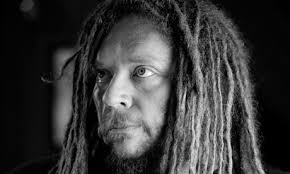
Unknown-2The third person I want to acknowledge as an influence is Jaron Lanier and his book You Are Not a Gadget. I’m a religious studies scholar, so forgive me, but Jaron strikes me as a latter-day techno-prophet, warning us of the apocalyptic perils that lie ahead if we allow soulless machines to become our masters.  His book is a passionate call to fight against “cybernetic totalism” and the economic power of “lord aggregators” of the web—I love that term—whose driving interest is to commercially exploit our personal information.  As someone trying to build a database that includes a lot of personal information, I have thought long and hard about Jaron’s cautionary ideas, and I’ve done my best to design the SDDb in a way that will enhance rather than diminish people’s freedom and creativity in exploring the world of dreams.

I read Jaron’s book in the summer of 2011, and soon afterwards he was profiled in a New Yorker magazine article.  The article was actually kind of lame, focusing more on his counter-cultural appearance and behavior than the substance of his ideas.  Well, as fate or synchronicity would have it, the day after the New Yorker article came out, I bumped into Jaron down at the market, Andronico’s at the corner of Shattuck and Cedar in north Berkeley.  He was there with his daughter in the produce section.  Normally I’m very reluctant to just walk up and talk to anyone, let alone prominent people, but this was too coincidental, especially since I had learned in Jaron’s book about a 15th century text called “Poliphili’s Strife of Love in a Dream,” a fantastic dream text I’d never heard of before, which I immediately bought and started reading.

So anyway, we were both picking through the lemons, and I went ahead and said hi, I just read that New Yorker article about you. Jaron said yeah, he didn’t really recognize the person they were describing in the article. I quickly tried to think of something to say about how much I valued his ideas, but I’m not a very quick thinker, so all I could come up with was to say thanks for teaching me about “Poliphili’s Strife of Love in a Dream.”  I’m sure that comment came across as completely weird and off the wall, and so I hastily moved on to the cereal aisle, and that was that.

So Jaron, if you ever see this, I’m really sorry for stalking you in the Andronico’s produce section a couple of years ago.  What I really want to do is thank you, along with Larry and Kurt, for inspiring the mission, the content, and the code of the Sleep and Dream Database.  Thanks to you all.

The Social Networks of Dreaming

imagesDigital technologies have given us new ways to socialize and to track, measure, and reflect upon our socializing.  Humans have always been social animals, as Aristotle said long ago, but now we’re social animals with smart phones, email, Facebook, Tubmlr, and Twitter.  It’s not just that these tools and platforms dramatically expand the range of our social interactions—they do—but more importantly they enable us to observe those interactions over time in finely grained detail and analyze them for personal insight.


An unusual but promising development in this area is the use of social network analysis in the study of dreams.  Despite their occasionally strange and otherworldly content, people’s dreams offer a surprisingly accurate source of information about their most important emotional concerns in waking life, including their relationships with other people.

Richard Schweickert, a professor of psychology at Purdue University, has done pioneering work in demonstrating the validity of applying the latest tools of social network analysis to dream content.  Schweickert (with the help of G. William Domhoff) analyzed the lengthy dream journals of three participants, 2 women and a man.  He identified all the characters that appeared in the dreams and created maps of “affiliation networks” to indicate how often the various characters appeared in the same dreams together.

His results showed that all three dream series had a nonrandom “small world structure,” meaning that certain characters appeared together in the dreams far more frequently than would be predicted by chance alone.

Schweickert’s research is more than another piece of evidence supporting the notion that dreams are meaningfully structured psychological phenomena, not just random neural nonsense from the sleep-addled brain.  His findings cast new light on the profoundly social nature of human dreaming, showing that dreams can be a potentially valuable mirror revealing the people who matter to us the most.

For example, the participant known as “Merri” dreamed more often of her recently deceased sister than of any living person in her current waking life. This suggests that we dream about people who are especially meaningful, not necessarily the people with whom we spend the most time.

Schweickert also noticed that another of the participants had many dreams of family members and of work colleagues, but rarely dreams including people from both those spheres of his life.  This participant was an insect taxonomist by profession, prompting Schweickert to speculate that “perhaps his cognitive style is to focus”; this might account for the mutually exclusive categories of social interaction in his dreams.

What’s most exciting about these findings is that they open the door to deeper and more sophisticated examinations of our social networks.  Who are the interlinked communities of people we dream about the most often?  Which of our dream characters serve as mediators connecting different communities?  What happens when characters we personally know appear in the same dreams as celebrities we’ve never actually met (e.g., actors, musicians, athletes)?  Who are the “lone wolves” of our dream life, people who only appear by themselves and never with other characters?  How do the social networks of dreaming relate to other aspects of dream content such as emotions, colors, and settings?  Do we only dream of some people in happy situations, and other people only in frightening scenarios?

The technology needed to answer these questions is emerging rapidly.   Better than counting Facebook friends or Twitter followers, the big data of dreaming offers a valuable source of honest, accurate insight into the intricate web of social relationships that shape our lives.


Note: this post also appears on the Huffington Post, as of September 3, 2013.


Trouble on the Night Shift: Bad Dreams About Work

work nightmare“Sleep, the gentlest of the gods, the spirit’s peace, whom care flies from: who soothes the body wearied with toil, and readies it for fresh labors.”


That’s how the Roman poet Ovid described sleep in his first century CE masterpiece the Metamorphoses.


Many people today desperately seek the restorative blessings of sleep just as Ovid described, but instead they find themselves plagued by bad dreams about work.  Rather than providing a peaceful respite from the burdens of waking life, sleep for many people has become a battleground of job-related stress and financial anxiety. In a recent online survey I conducted with Harris Interactive, 2252 American adults were asked to describe a dream relating to their work or employment status.  All the reports are available via the Sleep and Dream Database (SDDb) website.  (Here’s a link to the reports of 10+ words in length.)  These dreams offer a fascinating window into the workplace experiences of people across a wide demographic swath of American society.

Reading through the dream reports, it becomes clear that each job or profession has its own distinctive type of nightmare:

A trucker dreamed of a car cutting him off, so he had to slam on the brakes and then fight to control his rig as it started to jack-knife.

A nurse dreamed of her patients unhooking themselves from their monitoring equipment and wandering off, which led to the nurse getting fired for incompetence.

A waiter dreamed about having too many customers to serve, forgetting where the tableware was, and losing track of all the orders.

An electrician had vivid recurrent dreams about needing to fix strange gadgets with hundreds of wires, none of them labeled.

Several teachers had bad dreams about being unprepared for class, dealing with uncooperative students, and struggling with new technologies.

Numerous office administrators had nightmares of phones not working, desks piling up with unfinished work, and calculators streaming out endless amounts of rolled paper.

Whatever makes people feel powerless, overwhelmed, or out of control in their particular type of work, that’s going to drive the content and emotions of their dreams.

Sometimes people’s anxieties are transformed by the dreaming imagination into bizarre scenes that reflect a kind of surrealistic commentary on their employment situation.  Ovid would surely be delighted by metamorphic dreams like these:

A 30-year old woman from Arizona dreamed that “giant staplers were chasing me down the hall” at the school where she works. 

A 35-year old software developer from Minnesota dreamed of going to apply for a job and finding the interviewer was an alien with green skin and a large almond-shaped head. 

A 62-year old woman from Illinois dreamed that a computer was chasing her yelling “Program me!”

A 64-year old man from Minnesota who recently lost his job dreamed he had gone back to his office, but instead of the familiar building it was a strange storehouse for used furniture: “I think the dream meant that my former job was basically warehousing people who needed to move on.”

Weird and troubling as these dreams may be, they in fact make perfect sense in light of scientific research showing that dream content tends to accurately reflect people’s waking life emotional concerns.  Anything that worries us in waking life will likely show up in our dreams, either literally or metaphorically.  This idea of meaningful continuities between dream content and waking life concerns has a lot of data to support it, much of it generated by G. William Domhoff and available on his dreamresearch.net website.

For many people today, worries about their jobs and personal finances top their list of emotional concerns in waking life.  Several of the survey participants spoke of their fears about losing their jobs or trying to find a new one.  A 27-year old Arizona man who has recurrent nightmares of being attacked by bears said, “You never know if you will have employment the next day.”  In such a tenuous economic environment, dream content will naturally reflect people’s job-related worries and preoccupations.

There seems to be a rough evolutionary logic to these kinds of bad dreams.  Several researchers, most recently Antii Revonsuo and Katja Valli, have proposed that one of the functions of dreaming is to simulate possible threats in the waking world, helping to prepare the individual to better handle those threats if they ever actually occur.  In this view nightmares give us a safe opportunity to mentally practice survival-related behaviors and get ready for potential dangers.  The short-term pain of upsetting dreams is outweighed by their long-term gain in promoting greater vigilance and preparedness.

It should also be noted the same powers of imagination that generate vivid work nightmares can also generate many other kinds of dreams as well.  Here too there is good scientific evidence to support the idea that dreaming is an inherently creative and multidimensional activity.  During rapid eye movement (REM) sleep, the time of the sleep cycle when most dreaming occurs, the brain becomes hyper-associative.  The constraints of externally focused consciousness loosen, allowing innovative possibilities to emerge out of wide-ranging connections between perceptions, memories, instincts, and cultural influences.  This is why dreaming seems so crazy and scattered—and why it’s occasionally the source of brilliant flashes of creative insight.

If you have recurrent nightmares about work, try this: After getting in bed each night and turning off the light, take a moment to think about the amazing creative powers in your own dreaming imagination.  If your dreams can create vividly realistic scenarios of work, what other kinds of scenarios could they create?  What are the strangest, most otherworldly dreams you’ve experienced in the past?  What would you like to dream about now?

Your dreams may feel like foes, but with an open mind and playful spirit you can persuade them to become allies.


New Venue for Talking About Sleep and Dream Research

UnknownI’ve just started writing a blog on sleep and dreams for the Huffington Post—let me know what you think!  Initially I’ll focus on children’s dreams, using material from the book I co-wrote with my mother, then eventually I’ll broaden the scope and write about new developments in dream research and cultural expressions of dreaming.


Here’s a link to the first post, titled “Hey Parents, It’s Not ‘Just a Dream.’


The Best New Dream App

UnknownToday is the launch of the Kickstarter campaign to fund the SHADOW mobile application for tracking dreams and creating a new and bigger community of dreamers than ever before possible.  There’s a lot of potential here, especially for people who are already familiar with dream research and have good ideas about how such a project could develop to benefit the most people.  As an advisor to SHADOW I’ve been doing my best to promote greater awareness of the privacy and ethical issues involved here, and I have also been helping sketch out possible paths for future development and growth.  I can honestly say that nothing is set in stone–SHADOW will develop from the ground up, based on user interest and support.  If you are someone who cares about the importance of dreams and wants to broaden public appreciation of the creative powers of dreaming, don’t stand on the sidelines–get involved, get active, and help us create the future!  This video offers my 3-minute appeal for your support.

Cosmo Romance Dreams

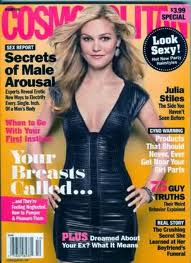
A couple of years ago a reporter from Cosmopolitan magazine sent me a list of dream types she had gathered from other women in her office.  I can’t remember if an article ever appeared, but I thought the dreams were interesting as expressions of the concerns many women feel about their romantic relationships.  Here is the intro I gave to the reporter, the dream types, and my comments. (Note: I just found a copy of the article.  It appeared in the December 2010 issue, p. 112, under the rather lurid title “What Your Freaky Love Dreams Mean.”)


Many of these dreams seem to have a distressing, negative tone, so let me say that in general I look at “bad” dreams and nightmares as valuable opportunities for insight and growth.  Such dreams usually revolve around the most emotionally important and challenging issues of our lives.  They focus on our difficulties precisely in order to give us a deeper understanding of what’s going on and what we might do about it.


1) You’re back with an ex.
*Is there a different interpretation depending on whether the ex you dreamt about was a nice guy who you had a good relationship with vs. a bad guy who didn’t treat you well?
Dreaming about one’s past romantic partners never ends.  He may be gone from your waking life, but, for better or worse, he’ll linger in your dreams forever.  These kinds of dreams do NOT automatically mean you want to get back together with him.  Rather, they reflect the complex and long-lasting impact any serious relationship makes on your unconscious mind. The details of the dream are important: I would want to know, in what situations does your ex appear?  What kind of emotional energy does he bring into the dream scenario?  If he’s a “good” ex, perhaps the dream suggests there’s still a way in which his presence is a helpful force in your waking life.  If he’s a “bad” ex, maybe it reflects a sense of still being trapped in the relationship, or possibly threatened by something symbolized by his kind of personality.

2) Your partner betrays you in some way (like cheating, lying, or revealing something personal about you to everyone).
This is the price of a committed relationship: a vulnerability to betrayal.  No matter how strong a relationship may appear in waking life, both people inevitably suffer some degree of insecurity, both conscious and unconscious, about their partner’s being unfaithful.  This insecurity naturally comes out in dreams that vividly portray how badly you would feel if your partner violated your trust and fidelity.  It’s possible the dreams are clues to an actual problem in the relationship (again, the details matter), but usually such anxiety dreams are reminders of our exposure to extreme emotional pain whenever we form a romantic bond with someone else.
3) You blow it with your man (whether by having a one-night stand, saying something cruel to him, etc.).
Monogamy doesn’t come easily.  We all have within us complex and conflicting feelings about our romantic partners.  It’s important to acknowledge and accept those feelings when they arise in dreams, even if we don’t necessarily act on them.  That said, if someone were having these dreams frequently, I’d certainly wonder about the quality of their waking relationship.
4) You’re engaged, and there’s something off about your ring—the stone is missing or so small you can’t see it, it’s ugly, etc.

An engagement ring is an ancient emblem of love and commitment, a very public announcement of two people’s plans for a future life together.  This makes it an excellent dream symbol for a person’s feelings about the impending marriage.  Because the focus in these dreams is usually on the appearance of the ring, I’d want to ask if there’s a concern about the appearance vs. the substance of the relationship.

5) Something weird happens during your wedding (like you can’t see the groom’s face).

A wedding is one of the most momentous rituals of human society, a true rite of passage that forever binds two people’s lives into one.  The awesome magnitude of this life change is often reflected in distressing dreams of wedding day disaster.  A Buddhist perspective might be helpful here: In that tradition’s view, a dream of wedding catastrophe could be a good dream because it shows your old way of life is dying and a new and better way of life is being born.  The weirdness reflects the shifting of your reality from the past to the future.  In the case of the groom’s missing face, it might be that his appearance and personality are not the primary focus here; what’s ultimately important is the power of the vows you’re making with him.