 Summer of 2026 brings several long-term projects to final fruition, with others just starting to grow and take shape.
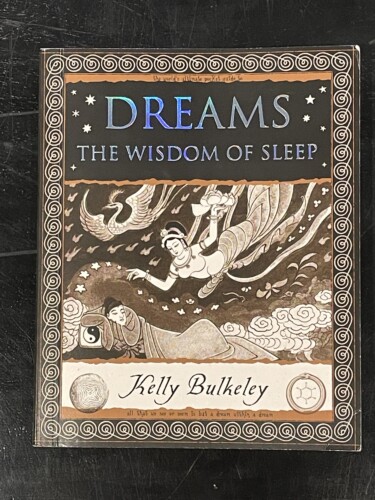
My contribution to the Wooden Books series is done and will be released soon–October 1 in the UK, and March 1 of next year in the US. It’s a little book, about 6″ x 6″ and 58 pages long, with all the cool graphics and design that makes the other Wooden Books so fun to read.
I also finished proofreading the final text of The Spirit of Dreaming in Shakespeare, which will be published by Palgrave Macmillan in the next month or two. The main themes of that work: 1) the dream references in Shakespeare’s plays and poems represent a form of subtle spirituality; 2) the theory of dreaming as a kind of play (ie., my theory) has its roots in Shakespeare; and 3) live theater at its best generates an experience of shared dreaming.
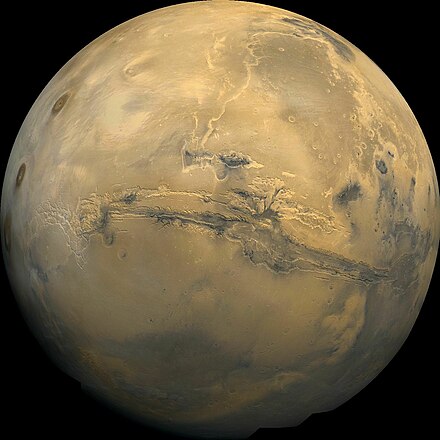 Volume II of the Apollo Project series, The Moons of Mars, is nearing completion and will be available in early fall. It continues the horror/sci-fi story begun in volume I, Escape from Mercury, including more adventures with Chere Hite, Brother X, Lucia del Toro, and the Space Cowboy.
New developments are happening all the time with the Elsewhere.to dream journaling app. New interpretation modes, new insights from the user community, new collaborations with researchers and journalists–the team is cooking on high heat! I’m lucky to be working with and learning so much from Andrew, Victoria, Gez, Kat, and Dan.
With help from Kat, Jennifer Lane, Maja Gutman-Music, and Linda Koncz, I hope to keep expanding and refining the Sleep and Dream Database (SDDb). We have many more dream series and demographic surveys to add, along with some brief videos to show how the SDDb’s features work.
Alisa Minyukova has organized a fantastic weekend event on behalf of the Dream Mapping Project at the end of September, at the Brooklyn Public Library. I’m helping with the event, and scheduled on Sunday, Sept. 27 to moderate a discussion about dreams and consciousness with David Pena-Guzman, philosophy professor and author of the excellent book When Animals Dream.
 At some point the Dream Library will be finished, and the book-moving process will begin. Assuming all goes well, the first public gatherings will happen next year, including a Dream Mapping Project event focused on dreams and art.
After the books settle into their new home, and assuming the world holds together a little longer, I hope to focus my writing energies on 1) the three philosophies of dreaming, 2) evidence supporting the dreaming-is-play theory, and 3) volume III of the Apollo Project, The Venus Special…
 The Odyssey warns against seeing in dreams what we want to see.
 The friendly dream-sharing of Benjamin Rush and John Adams took an eerie prophetic turn.
  What if you know more about the meanings of another person’s dreams than they know?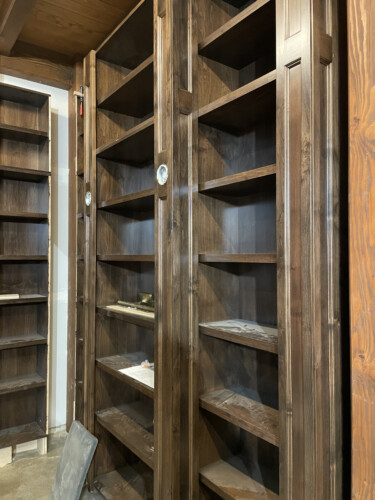
 As both a dreamer and a researcher, I find myself completely enchanted by the