
 Naps are not an indulgence or a sign of laziness, but a simple way of rejuvenating your mental and physical well-being.
Here are four reasons why you should find a time and place for a brief daytime snooze.
1. You probably need it.
Many people today are sleep deprived at moderate to severe levels. Long work hours, busy personal lives, noisy urban environments, and the stimulation of various personal devices are all making it harder than ever to get as much sleep as our minds and bodies require. A quick siesta cannot make up for all the sleep you’ve lost, but taking a nap whenever you have the chance will protect your health and diminish the long-term effects of sleep deprivation.
2. You may be a naturally polyphasic sleeper.
Millions of years ago, our primate ancestors lived in trees, and they were polyphasic sleepers, meaning they slept at multiple times across the day and night. When our species emerged we came down from the trees and became mostly monophasic sleepers, with one major period of sleep during the night. But some humans have always had a strong innate tendency toward a polyphasic sleep cycle, and this is true for some people today, too. Such people naturally need to take naps at various points during the day. They are not lazy or slothful, they just have biological constitutions that function best with polyphasic sleep. Unfortunately, they often have to conform with the work schedules of a monophasic society, just as naturally left-handed people have to adapt to the architecture and design of a right-handed world.
3. You can boost your performance with a well-timed nap.
The greatest athlete-napper in the world right now has to be Mikaela Shiffrin, the gold-medal winning alpine skier from the 2018 Winter Olympics in Pyeongchang. She regularly naps between runs on race days, keeping her mind and body at maximal freshness. Many top-level athletes also give themselves the opportunity to nap before a competition. For example, the basketball player J.J. Reddick of the Philadelphia 76ers takes a nap between 2 and 4 pm every day before an evening game. When he wakes up, he begins a pre-game routine that leads him right to tip-off. These athletes know the power generated by healthful sleep, and they have learned to focus that power on optimizing their performance. You can apply this same principle in your own life, by letting yourself nap before facing a major challenge or task that requires you to be at your best.
4. You can explore lucid dreaming.
Many people find it easier to enter into lucid dreaming during a nap than during a regular night’s sleep. (A “lucid” dream is one in which you know you are dreaming within the dream). During a nap the mind is still fairly close to waking consciousness, which allows for more cross-fertilization between different modes of awareness. This is actually a widespread practice through history for people seeking creative insights and alternative perspectives towards waking life challenges. Artists, scientists, and advanced meditators have all drawn inspiration from brief, lucid spells of daytime sleep that open new ways of looking at reality upon awakening.
This post first appeared in Psychology Today, May 7, 2018.
 There is a surprisingly easy way to stimulate an intense phase of dreaming, if you’re willing to take advantage of the “rebound effect” of sleep deprivation. The rebound effect is a term for when a person sleeps longer than usual after a period of sleeping shorter than usual. The magnitude of the rebound depends on 1) the severity of the sleep deprivation and 2) the freedom to sleep without awakening after the deprivation.
 The most important findings of scientific dream research can be summarized in nine key points. Many important questions about dreaming remain unanswered, but these nine findings have solid empirical evidence to support them.
 All life on earth is fundamentally oriented toward the cyclical presence and absence of the sun. Every kind of living being has evolved internal clocks of approximately 24 hours in length that guide and regulate their biological processes and behaviors. These internal clocks are known as circadian rhythms, and they have long been observed as powerful factors in plant and animal life. But only recently have the details of how these clocks work become known, thanks to the work of this year’s trio of prize winners. Their studies, going back to the 1980’s, explain how circadian rhythms are programmed into the genetic activities of each cell at the molecular level.
 It may also give us new insights into the rhythms, cycles, and recurrent patterns in human dreaming. Anything that gives a new understanding of sleep has the potential to provide a new understanding of dreams, since dreaming naturally emerges out of the state of sleep. The ubiquity of dreaming in human experience throughout recorded history, in cultures all over the world, strongly suggests it is a phenomenon deeply rooted in our evolutionary heritage. It strengthens the argument in favor of this idea to show, as this year’s Nobel winners have done, that the circadian rhythms guiding our waking and sleeping behaviors are encoded in every cell in our bodies. There can no longer be any question that sleep is an absolutely vital feature of healthy human life. The study of dreams can build on this solid foundation in evolutionary biology to explore in more detail what exactly is happening in the mind and body during sleep that contributes so powerfully to human health.
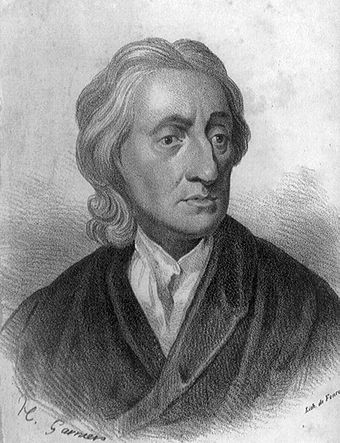 The English philosopher John Locke (1632-1704) played a vital role in promoting the ideals of the Enlightenment throughout Europe in the seventeenth and eighteenth centuries. These ideals included a trust in human reason, a corresponding distrust in authority and received opinion, and a demand that people who make theoretical claims about nature, society, the mind, etc., must offer empirical evidence to back up their assertions.
 For anyone interested in learning more about dreaming, I have a simple piece of advice: keep a dream journal. Record your dreams on a regular basis, track their themes and patterns over time, and you will discover through your own experience many of the key psychological principles that shape the general process of dreaming.
  Have you ever had a dream of flying, or being chased, or having an intense sexual experience, or seeing someone who is dead appear as if they were alive again? Write those out, too. Do you remember any recurrent dreams? That’s very important to note, because recurrent dreams provide one of the best points of entry for a study of the long-term themes and patterns in your dreaming.
 It is worthwhile to include information about one’s sleep patterns in the journal, since the conditions of sleep often make a significant impact on the dreaming process. Ideally, each entry has the date, the location where you are sleeping, the time you go to sleep, the time you wake up, and a subjective assessment of the quality of your sleep (e.g., good, fair, poor). If you do not remember any dreams for that night, at least you have gathered some useful information about your sleep.
 Along with the dream report, a journal will typically include thoughts, memories, and associations that come to mind in relation to the dream. These comments can be brief or very extensive, depending on your time and inclination.
 Carl Jung, one of the pioneers of Western dream psychology, proposed back in the 1930’s that a series of dreams can provide an extremely useful means of exploring an individual’s life. In his essay titled “Individual Dream Symbolism in Relation to Alchemy,” he presented his analysis of “over a thousand dreams and visual impressions coming from a young man of excellent scientific education.” (116) Jung described his method in these terms: